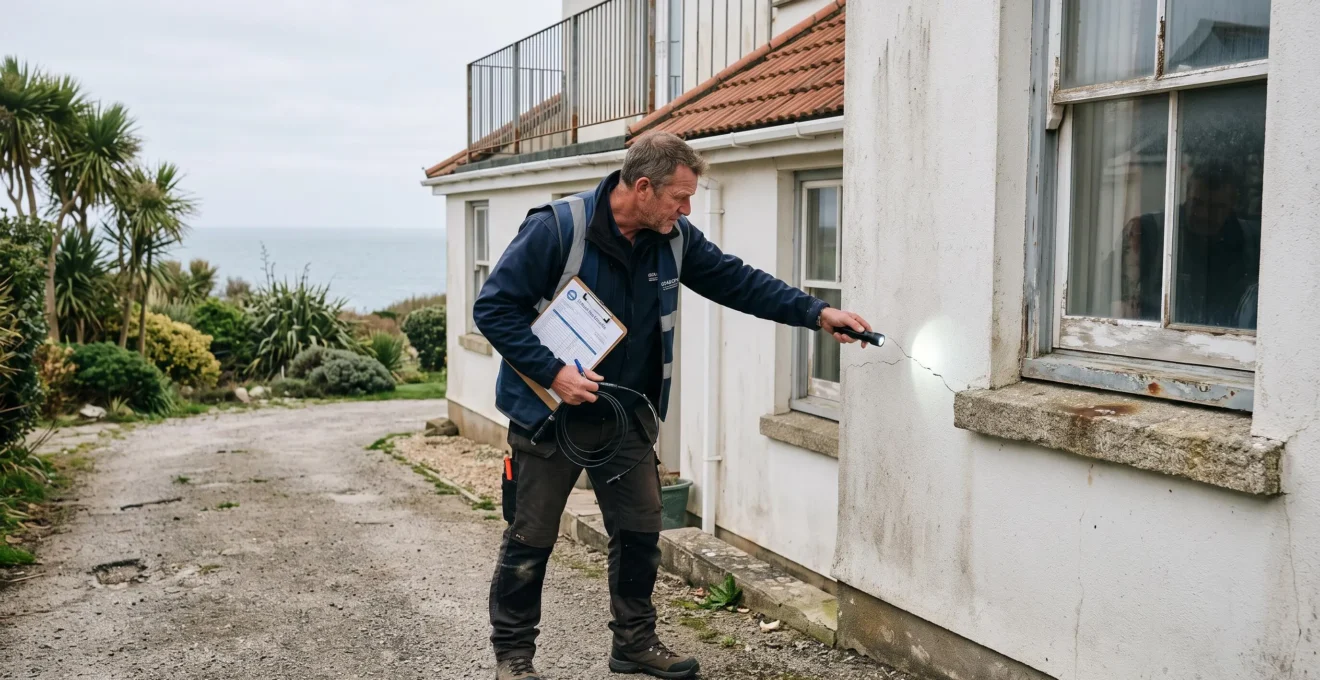
Preserving an overseas property’s value over ten years requires more than relying on local property market appreciation. The physical condition of the building, the timing of major replacements, the quality of maintenance and the availability of reliable local management all influence its long-term financial performance. A property can benefit from rising neighbourhood prices while losing its competitive position because its roof, façade, plumbing or mechanical systems have deteriorated.
The most effective approach combines regular condition monitoring with a component-based capital expenditure plan. Owners should assess remaining useful life rather than rely exclusively on theoretical replacement intervals, budget for local labour and logistical constraints, and document every significant inspection and intervention. Remote monitoring is particularly important when a property remains unoccupied or is visited only occasionally.
Over a decade, these measures help prevent deferred maintenance from accumulating into expensive repairs and unexpected resale negotiations. They also provide prospective buyers with evidence that the property has been managed responsibly, reducing uncertainty about its condition and future investment requirements.
Protecting Overseas Property Value: Key Principles
- Monitor the building’s physical condition and compare its resale position with genuinely comparable local properties.
- Build a ten-year capital expenditure forecast using component condition, remaining useful life and locally validated replacement costs.
- Combine preventive maintenance, documented remote inspections and timely renovation decisions to control deterioration and protect resale appeal.
- Why Can an Overseas Home Lose Resale Appeal Even When Local Property Prices Rise?
- How Can You Budget for Roof, Façade and Building System Replacements Abroad?
- Preventive Maintenance or Reactive Repairs: Which Protects Long-Term Property Value Better?
- How Humidity and Coastal Corrosion Can Damage an Overseas Property Between Visits
- When Should Overseas Owners Renovate Before Selling Rather Than Leave Repairs to Buyers?
- How Can You Set Up a Remote Maintenance System for an Overseas Rental Property?
- The Architectural Design Features That Can Make a Luxury Home Expensive to Maintain
- How Can You Protect the Long-Term Asset Value of Property Held Overseas?
Why Can an Overseas Home Lose Resale Appeal Even When Local Property Prices Rise?
An overseas home can lose resale appeal even when local property prices increase because its individual condition matters independently of the wider market. Buyers compare available properties, not simply neighbourhood price trends. If competing homes have newer roofs, updated interiors and more reliable building systems, an ageing property may require a price adjustment to remain attractive. Market appreciation does not automatically compensate for physical deterioration.
This distinction separates general market appreciation from the property’s relative market position. A neighbourhood may attract investment and experience stronger demand while an individual house falls behind its competitors. Its owner might still achieve a nominally higher sale price than ten years earlier, but the difference between the achievable price and the price of comparable maintained properties can become substantial.
Valuation methodology helps explain this mechanism. Comparable evidence is used to assess a property’s position against relevant transactions, with adjustments required for differences in condition, characteristics and location. The RICS professional framework for RICS comparable evidence in real estate valuation standard provides guidance on selecting and assessing such evidence. It does not establish a universal maintenance discount: the actual adjustment depends on the local market and the property being valued.
Distance makes the problem harder to recognise. An owner who visits once or twice a year may remember the property as it appeared during the last stay, while humidity, corrosion, leaking seals and ageing equipment continue developing between visits. Cosmetic improvements can also conceal deterioration without resolving its underlying causes.
A practical safeguard is an annual comparative review using actual local transactions where available. The owner should compare the property with similar homes in terms of location, size, condition, amenities and renovation standard. Asking a local valuation professional to distinguish the property’s current condition from the wider market trend can reveal an emerging resale gap before a sale becomes necessary.
The comparison should also consider competing listings, although asking prices must not be confused with completed transaction prices. A property that appears reasonably priced against advertised homes may still be poorly positioned against recently sold, renovated alternatives.
Once the condition gap is understood, the next priority is translating future deterioration into a realistic investment schedule. That requires identifying which building components will need attention during the holding period.
How Can You Budget for Roof, Façade and Building System Replacements Abroad?
Overseas property owners can budget for major replacements by creating a component-based capital expenditure forecast. Instead of allocating an arbitrary annual maintenance allowance, identify the principal building elements, assess their current condition, estimate their remaining useful life and obtain local replacement-cost estimates. This approach makes future expenditure more predictable and helps prevent an individual failure from triggering additional building damage.
The first step is to establish a component register covering the roof, external façade, waterproofing, windows, plumbing, electrical installations, hot-water equipment and heating or cooling systems. Each component should have a recorded installation or replacement date where known, its observed condition, maintenance history and an estimated remaining service life.
The Community Associations Institute Reserve Study Standards provide a useful framework for identifying components, assessing physical condition, estimating remaining useful life, forecasting replacement costs and developing funding plans. These standards concern community associations, particularly in the United States, and should be treated as a planning methodology rather than an international legal requirement.
International owners must also account for costs that may be less visible in initial contractor estimates. These include difficult site access, imported materials, limited availability of specialist tradespeople, currency fluctuations, local taxes and the additional coordination required when the owner cannot supervise the work personally. Estimates should therefore be validated with contractors familiar with the specific property location.
A useful estimate should distinguish between planned replacement and emergency intervention. A roof replacement scheduled during a quieter period may allow better contractor selection and reduce disruption to rental income. By contrast, an unexpected failure during a busy rental season can combine emergency labour costs, additional water damage and lost bookings.
Shared buildings require a separate responsibility assessment. In a condominium or homeowners association, the roof, façade, lifts and shared mechanical systems may fall under common-area management, while windows, internal plumbing or individual installations may remain the owner’s responsibility. The governing documents, applicable legislation, reserve position and decision-making procedures should be checked before relying on a communal maintenance budget.
For each major component, the owner should ask contractors to clarify:
- Whether the estimate includes labour, materials, transport, disposal and taxes.
- Which materials and technical specifications are included.
- Whether scaffolding, access equipment or specialist subcontractors are required.
- What assumptions could cause the final cost to change.
- What warranty, completion documentation and after-work inspection are provided.
The resulting forecast should be updated annually. Remaining useful life is an estimate, not a guaranteed replacement date, and actual expenditure must reflect observed deterioration and local conditions.
However, budgeting alone does not preserve the building. The financial benefit depends on choosing the right intervention at the right time, which makes the distinction between preventive maintenance and reactive repairs essential.
Preventive Maintenance or Reactive Repairs: Which Protects Long-Term Property Value Better?
Preventive maintenance generally offers stronger protection for long-term property value because it identifies deterioration before defects spread into more expensive building components. Reactive repairs remain appropriate for some non-critical issues, but delaying work involving water ingress, waterproofing or essential building systems can increase both the eventual repair scope and the disruption to the property.
The central issue is the way building defects develop. A deteriorating window seal, blocked drainage outlet or small roof leak may initially require a relatively limited intervention. If moisture reaches insulation, timber, plaster or structural elements, however, the necessary work can become substantially more complex. The cost of deterioration is therefore not necessarily proportional to the time a defect remains untreated.
A practical decision framework separates maintenance into three categories:
- Preventive priorities: roof integrity, waterproofing, drainage, plumbing leaks, electrical safety and ventilation. These require scheduled checks and prompt action when defects appear.
- Condition-dependent repairs: façade finishes, window seals, external coatings and mechanical equipment. Their treatment should depend on inspection findings, environmental exposure and remaining service life.
- Discretionary improvements: decorative finishes, non-essential fittings and cosmetic upgrades. These can often be scheduled around occupancy, rental demand or an anticipated sale.
Owners should also recognise when replacement is more appropriate than repeated repairs. An ageing air-conditioning unit that repeatedly fails, for example, may justify replacement if continued servicing becomes uneconomic or replacement parts are difficult to obtain. The decision should consider reliability, operating costs, technical compatibility and the remaining life of associated systems.
Distance changes the economics of the decision. A local owner can often inspect a problem immediately, obtain several quotations and supervise a repair. An overseas owner may discover the same problem only through a tenant report or periodic inspection. By the time a contractor has been appointed and access arranged, a relatively minor defect may have progressed.
For seasonal rental properties, the period between occupancies is particularly important. Checks should cover visible leaks, water pressure, drainage, seals, unusual odours and the condition of essential appliances. A property that is empty between bookings has no permanent occupant to report early warning signs.
Reactive maintenance is not inherently inappropriate. Repainting a sound interior wall or replacing a purely decorative fitting can be postponed without necessarily threatening the building’s integrity. The critical distinction is whether delay increases the risk of physical damage, safety problems, loss of functionality or a material resale disadvantage.
In practical terms, a preventive maintenance policy should establish inspection responsibilities, reporting deadlines, emergency procedures and spending approval thresholds. That structure allows local representatives to respond without waiting for every decision to be made across borders.
Environmental exposure is one reason why these priorities differ considerably between overseas markets. Humidity, salt and temperature variations can accelerate deterioration even when a property appears sound during occasional visits.
How Humidity and Coastal Corrosion Can Damage an Overseas Property Between Visits
Humidity and coastal corrosion can damage an overseas property gradually, often affecting components that are difficult to inspect during a short visit. Salt-laden air attacks exposed metals and hardware, while persistent moisture encourages mould, timber deterioration and damage to finishes. The precise risks depend on local climate, building design, ventilation, material selection and how long the property remains unoccupied.
Coastal environments create particular challenges for metal components. Window hardware, railings, external fixings, fasteners and mechanical equipment can experience corrosion through repeated exposure to salt and moisture. Some deterioration develops behind visible surfaces, making an external visual inspection insufficient to establish the condition of concealed fixings or other components.
In humid climates, inadequate ventilation, condensation and moisture intrusion can contribute to damp and mould. Timber joinery, cupboards, internal wall finishes and concealed spaces may be vulnerable, particularly when rooms remain closed for extended periods. In regions with pronounced wet and dry seasons, repeated moisture changes can also contribute to cracking and deterioration of external finishes.
These mechanisms require different responses. Corrosion prevention involves appropriate materials, protective coatings, cleaning and inspection of exposed metalwork. Moisture control requires identifying the source of water, maintaining ventilation and drainage, and correcting leaks or building defects rather than simply treating visible staining.
The UK government’s UK government guidance on damp and mould prevention in homes identifies building deficiencies, inadequate ventilation and condensation as potential contributors to damp and mould. Its recommendations concern housing in England and should not be treated as legislation applicable to overseas properties in other jurisdictions.
Remote monitoring can improve early detection. Humidity sensors may be appropriate in vulnerable rooms, while temperature monitoring, leak detectors and consumption records can provide additional warning signs. Unusual water consumption may indicate a leak, and abnormal electricity consumption may reveal equipment operating continuously or inefficiently. These signals require investigation rather than being treated as definitive proof of a fault.
Photographic documentation adds another layer of control. The caretaker or property manager should photograph the same vulnerable locations from consistent angles, record inspection dates and report changes rather than relying on general statements that the property appears satisfactory. Comparing successive photographs makes gradual deterioration easier to recognise.
Unoccupied homes also need an appropriate ventilation and moisture-management arrangement. Depending on the climate and building, this might involve controlled ventilation, suitable dehumidification or periodic airing. The owner should verify that the chosen arrangement is compatible with local security, energy costs and the property’s technical systems.
Insurance deserves attention as well. Policy conditions vary by jurisdiction and insurer, particularly regarding unoccupied buildings, escape of water, inspections and maintenance obligations. Owners should check notification requirements and document reasonable maintenance activities. It would be unsafe to assume that every moisture-related claim is covered or that every prolonged damp problem is automatically excluded.
After moisture-related remedial work, the property should be checked again to establish whether the underlying problem has actually been resolved. The English government guidance discusses follow-up verification at least six weeks after completion in the context of damp and mould remediation; this is not a universal inspection interval for every property or building component.
Once the physical condition is understood and recorded, the same evidence becomes important when preparing the property for sale. The next decision is whether correcting defects before marketing is financially preferable to negotiating their cost with buyers.
When Should Overseas Owners Renovate Before Selling Rather Than Leave Repairs to Buyers?
Overseas owners should renovate before selling when a defect materially weakens buyer confidence, creates a significant and avoidable price negotiation, and can be corrected with a properly controlled project. Leaving minor cosmetic work to buyers may be reasonable, but unresolved structural, moisture-related or essential-system defects can create disproportionate uncertainty during due diligence and undermine the credibility of the asking price.
The decision should begin with the type of defect. A visibly damaged roof, persistent damp, unreliable plumbing or an ageing electrical installation can influence how buyers assess the property’s future expenditure. An owner who leaves these problems unresolved may face not only the estimated repair cost but also an additional allowance for uncertainty, inconvenience and the possibility of hidden damage.
This does not mean every renovation produces a positive financial return. The relevant comparison is between the expected cost of completing the work and the likely effect of leaving the defect unresolved. Local transaction evidence, professional advice and the property’s competitive position are more useful than generic assumptions about renovation premiums.
Three questions provide a practical decision framework:
- Market impact: Is the defect likely to discourage buyers or lead to substantial negotiation compared with similar properties?
- Project control: Can qualified local contractors deliver the work under a clear scope, agreed price and documented completion process?
- Buyer expectations: Are renovated and move-in-ready properties particularly competitive in the relevant local market?
The distinction between visible and concealed defects is important. Buyers may be comfortable negotiating over dated kitchen finishes or worn paint because the work is easy to understand. A suspected structural problem or recurring moisture issue is different: its full scope may be uncertain until specialist investigations have been completed.
For this reason, a pre-sale condition assessment is valuable several months before marketing. A local professional can identify outstanding defects, recommend appropriate investigations and help distinguish necessary remedial work from optional improvements. Structural or moisture-related problems should be assessed by appropriately qualified specialists rather than concealed beneath new finishes.
Cosmetic renovation without correcting the underlying cause is particularly risky. Repainting a damp wall may temporarily improve its appearance, but the original moisture source can remain active. If the problem reappears during a buyer’s inspection, the owner may face more difficult negotiations and a loss of confidence.
Remote project management adds another consideration. The owner should obtain a written scope, verify contractor qualifications and insurance where applicable, agree payment milestones, require progress photographs and arrange independent completion checks for significant work. The ability to control quality is part of the renovation decision, not an administrative detail.
When the cost or scope of major work is uncertain, transparent disclosure and appropriately supported pricing may be more defensible than attempting an incomplete renovation. The objective is not to maximise the number of improvements but to remove material obstacles to a credible sale.
These decisions become easier when the property has a reliable local management structure. A remote maintenance system allows owners to detect problems earlier, verify completed work and maintain the records needed for future investment decisions.
How Can You Set Up a Remote Maintenance System for an Overseas Rental Property?
A reliable remote maintenance system needs three connected elements: a clearly appointed local representative, a network of qualified service providers and a documented inspection schedule. Each element should have defined responsibilities, spending authority and reporting requirements. This arrangement allows overseas owners to respond to defects without personally coordinating every repair or relying entirely on informal updates.
The local representative may be a property manager, caretaker or specialist maintenance company. The important factor is not the job title but the clarity of the mandate. The owner should define which activities can be authorised without prior approval, which expenditure requires written consent and what constitutes an emergency.
Without these boundaries, two opposite problems can arise. A manager may delay necessary repairs because approval is unclear, allowing deterioration to continue. Alternatively, contractors may undertake work outside the owner’s intended budget or scope, creating disagreements over invoices and responsibility.
A written maintenance mandate should therefore identify:
- The representative responsible for reporting and coordinating defects.
- The types of maintenance that can be authorised routinely.
- The spending limit for work requiring no additional approval.
- The procedure for emergencies and attempts to contact the owner.
- The documentation required before and after significant interventions.
Service providers should be selected according to the building’s technical requirements. A general handyman may be suitable for minor repairs but should not replace qualified specialists for structural investigations, electrical work, complex plumbing or mechanical systems. Maintain a contact list with relevant qualifications, service areas, availability and previous work records.
Inspection frequency should reflect the building’s condition, occupancy pattern and local climate. A coastal rental property exposed to seasonal storms may require different checks from an apartment in a mild urban environment. Inspections should also be coordinated with tenant changeovers and periods when the property is vacant.
Remote verification is essential. Owners should receive dated photographs of fixed inspection points, reports describing observed defects, copies of contractor invoices and confirmation that authorised work has been completed. Water and electricity consumption can provide supplementary indicators of unusual activity.
Five Actions to Establish a Verifiable Remote Maintenance System
- Appoint a local maintenance representative and record the written mandate, contact details and responsibilities.
- Define spending authority and emergency procedures, producing a signed approval and escalation schedule.
- Identify qualified contractors for roofing, plumbing, electrical installations and mechanical systems, creating a verified service-provider register.
- Establish fixed inspection points and seasonal inspection dates, producing a dated maintenance calendar with photographic reporting requirements.
- Set up a central property maintenance register containing inspection reports, photographs, invoices, work authorisations and available utility consumption records.
Shared residential buildings require additional oversight. Owners should establish who controls maintenance of common areas, how extraordinary expenditure is approved, whether reserve funding is adequate and what reporting is available from the building manager or owners’ association. A privately maintained apartment can still be affected by deteriorating common infrastructure outside the owner’s direct control.
The system should be reviewed periodically. Repeated delays, unexplained invoices, missing inspection reports or unresolved defects are indicators that the management arrangement may need to change.
Management arrangements protect the property’s condition, but the original architectural specification also determines how much maintenance the building will require. This becomes especially important for luxury homes with complex finishes and specialist equipment.
The Architectural Design Features That Can Make a Luxury Home Expensive to Maintain
Luxury architectural features can increase long-term property maintenance costs when they rely on specialist materials, complex installations or equipment that is difficult to service locally. Large glazed surfaces, intricate roof geometries, infinity pools, natural stone finishes, proprietary home automation and residential lifts can all require specialised maintenance. Their purchase appeal should therefore be assessed alongside their long-term serviceability and replacement requirements.
Large areas of glazing, for example, can involve more demanding cleaning, seal inspection and replacement procedures than conventional window configurations. Complex roofs may require specialist access, additional waterproofing checks and skilled repair work. An infinity pool may depend on pumps, filtration equipment, balancing systems and components that are not readily available in every overseas market.
High-end materials also have different maintenance characteristics. Natural stone can require suitable cleaning and periodic treatment. Exotic timber may need protection against moisture, ultraviolet exposure or biological deterioration, depending on the species and location. Some metals require regular cleaning or protective maintenance to preserve their appearance and performance.
These requirements are not necessarily reasons to avoid luxury features. Their suitability depends on the local environment, the availability of skilled tradespeople and the owner’s willingness to fund the maintenance needed to preserve them. A material that performs well in one climate may require significantly more attention in another.
Technology dependence creates another long-term risk. A sophisticated automation system, specialist heating installation or proprietary air-conditioning controller may depend on a manufacturer or distributor with limited local representation. If replacement components become unavailable, a relatively minor failure can lead to a costly system upgrade or replacement.
Before purchasing or commissioning a high-specification property, owners should ask for the equipment inventory, installation records, maintenance invoices, operating manuals, warranty documentation and local service-provider contacts. The ability to obtain spare parts and technical support should be checked rather than assumed.
Annual ownership costs should also be considered in relation to the architectural design. Two properties with similar purchase prices can have very different maintenance requirements because one uses conventional, locally serviceable systems while the other relies on imported materials and specialist installations.
A practical comparison should examine:
- Material durability under local humidity, sunlight, temperature and coastal exposure.
- Availability of qualified local installers and maintenance technicians.
- Access to replacement components and technical documentation.
- Frequency and cost of required servicing.
- Whether individual systems can be repaired or replaced without major alterations to the building.
These considerations are particularly relevant when accepting bespoke renovation proposals. A visually impressive installation may create a long-term supplier dependency that is difficult to manage remotely. Alternative specifications should be considered where they provide comparable performance with more accessible maintenance arrangements.
These physical, financial and management considerations ultimately need to work together. A ten-year preservation strategy should translate them into recurring decisions, measurable responsibilities and documented evidence of the property’s condition.
Key Decisions Before Building a Ten-Year Preservation Strategy
- Establish the property’s current physical condition and its position against genuinely comparable local homes.
- Identify major components approaching replacement and allocate funding according to remaining useful life and locally validated costs.
- Put remote inspection, maintenance delegation and documentation procedures in place before defects become urgent or a sale becomes necessary.
How Can You Protect the Long-Term Asset Value of Property Held Overseas?
Protecting the long-term asset value of overseas property requires a coordinated ten-year strategy covering condition assessments, planned capital expenditure, remote maintenance, environmental monitoring and resale preparation. Rather than treating repairs as isolated expenses, owners should manage the building as a long-term asset with identifiable components, changing maintenance requirements and a documented investment history.
The first requirement is a reliable baseline assessment. A qualified local building professional should inspect the property, record the condition of major elements and identify defects requiring immediate attention. The resulting report should distinguish routine maintenance from significant capital expenditure and highlight areas requiring specialist investigation.
From this baseline, owners can establish a rolling investment forecast. Each year, the forecast should be updated using recent inspections, completed works, contractor estimates and changes in local conditions. Components with limited remaining useful life should receive priority, particularly where failure could damage other parts of the building.
A practical ten-year framework can be organised around three management cycles:
- Annual review: update the component register, review maintenance expenditure, inspect vulnerable areas and decide which projects should be initiated during the following two years.
- Professional condition review: arrange a more comprehensive building assessment every three to five years, adjusting the interval to the property’s age, condition, exposure and previous inspection findings.
- Strategic investment review: reassess the property’s competitive position, major replacement requirements, management arrangements and potential resale preparation as market conditions and ownership objectives evolve.
These intervals are a proposed management framework, not universal inspection requirements. A property experiencing active moisture ingress, structural movement or recurring system failures may need specialist attention much sooner.
Documentation is another essential part of asset preservation. The owner should retain inspection reports, maintenance photographs, invoices, contractor details, plans, equipment manuals, warranties and relevant building approvals. Records should be organised so that future buyers, surveyors and property managers can establish what has been inspected, repaired or replaced.
This evidence has practical resale value. A documented maintenance history can help prospective buyers understand the property’s condition, distinguish completed improvements from outstanding work and assess future expenditure with greater confidence. It cannot guarantee a higher valuation, but it can reduce uncertainty and make the property’s maintenance history easier to verify.
The alternative is a passive holding strategy based primarily on market appreciation. This approach assumes that increasing local prices will compensate for deferred maintenance. That assumption is unreliable: the building can lose its competitive position, require substantial catch-up expenditure and become more difficult to sell on favourable terms even while the surrounding market appreciates.
Owners should also distinguish between expenditure that preserves existing performance and improvements intended to increase market appeal. Replacing a failing roof is primarily an asset-preservation decision. Installing a premium kitchen may be a discretionary investment whose resale benefit depends on local buyer preferences. Both may be appropriate, but they should not automatically receive the same budget priority.
For an overseas owner, the most useful long-term record is therefore a single property asset register connecting physical condition, replacement forecasts, maintenance decisions and expenditure. It provides continuity when local contractors, managers or tenants change and makes the next investment decision easier to justify.
For owners approaching a new holding period, the logical next step is to commission or update a professional condition assessment, establish a component-based expenditure forecast and put a documented local maintenance system in place. These measures provide a more defensible basis for preserving overseas property value than relying on market appreciation alone.
How often should an overseas property be professionally inspected?
Inspection frequency depends on the property’s age, condition, climate, occupancy and exposure to environmental risks. An annual review of maintenance records and vulnerable components is a useful management practice, while a more comprehensive professional condition assessment every three to five years can help update the long-term investment forecast. Properties with active defects require earlier specialist inspections. Remote photographs and sensors provide additional information but do not replace professional building assessments.
Should overseas owners keep a separate reserve for major property repairs?
Yes. A dedicated capital expenditure reserve can help owners prepare for major replacements without relying entirely on emergency funding. The amount should be based on the property’s components, observed condition, remaining useful life and locally obtained replacement estimates. Owners in managed buildings should also distinguish individual maintenance reserves from contributions to communal reserve funds and verify the responsibilities established by local law and governing documents.
Can remote monitoring replace regular physical property inspections?
No. Remote monitoring can identify unusual humidity, water consumption, temperature or equipment behaviour, but it cannot reliably assess every building defect. Sensors should complement physical inspections, photographic reporting and specialist investigations where necessary. A local representative should be able to investigate alerts, document findings and arrange appropriate repairs.
Which property maintenance records should overseas owners retain for resale?
Owners should retain professional condition reports, dated inspection photographs, maintenance invoices, contractor details, repair specifications, warranties, equipment manuals, relevant building plans and records of significant replacements. Where applicable, building permits, approvals and shared-building maintenance documents should also be retained. A well-organised history helps buyers understand the property’s condition and verify the work completed during ownership.
Is it better to renovate an overseas property before renting it out or selling it?
The decision depends on the property’s intended use, current condition and local market. Before renting, priority should go to safety, essential building systems, weatherproofing and reliable equipment. Before selling, owners should assess whether unresolved defects are likely to generate substantial buyer uncertainty or negotiation. Cosmetic upgrades are more discretionary, and their financial benefit should be assessed against local comparable properties, contractor costs and the owner’s ability to manage the work remotely.